 NATIONAL REHABILITATION HOSPITAL
- Online840
- Search engine1
- Guest839
- Today204,584
- This month5,500,400
- Total80,856,667
THE HEALERS WHO GIVE NEW LIFE TO PEOPLE LEFT IMMOBILE
At the fragile boundary between life and death—and in the quiet struggle to restore every movement and every word to people whose bodies seem to have given up—the healthcare professionals at National Rehabilitation Hospital, Hanoi Medical University, located in Sam Son Ward, remain steadfastly devoted to their patients.
Guided by medical ethics rooted in compassion and specialist expertise, they work tirelessly day and night to make real-life miracles possible, helping people once confined by immobility return to the familiar rhythms of everyday life.
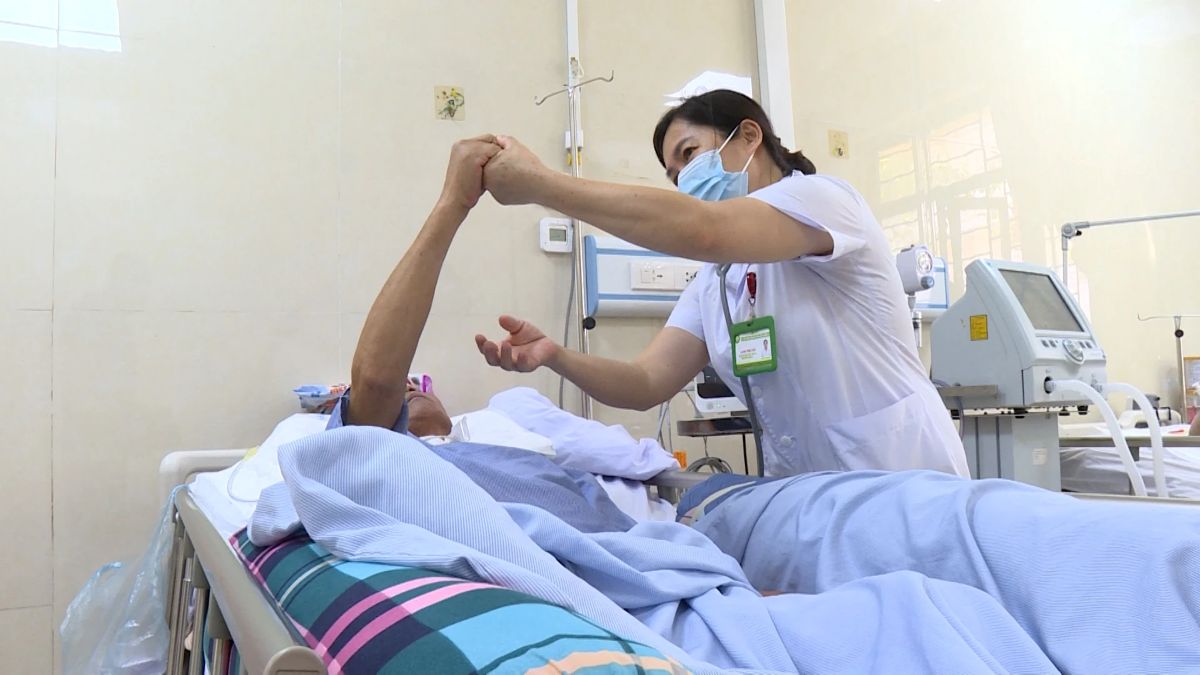
Dr. Lang Thi Tan, Level I Specialist Physician and Head of the Emergency Department, assesses a patient’s motor and sensory responses.
On a late-May day, Sam Son greeted us with the sweltering heat typical of summer in Central Vietnam. Yet the oppressive weather seemed insignificant compared with the intense, fast-paced atmosphere inside the Emergency Department at National Rehabilitation Hospital. Here, hurried footsteps, the steady beeping of cardiac monitors, and the sleepless eyes of doctors and nurses have become part of the department’s daily rhythm.
Having worn the white coat for more than 20 years—and having spent just as long confronting critical and life-threatening cases—Dr. Lang Thi Tan spoke thoughtfully about the nature of her work:
“The Emergency - Critical Care - Toxicology Department is a place where life and death can be separated by a matter of seconds. Our doctors and nurses must maintain the highest level of concentration as they fight to bring patients back from the brink of death.”
Behind this round-the-clock readiness lies a continuous process of learning and keeping abreast of advanced medical knowledge. When faced with a critically ill patient, an emergency and critical care physician must possess nerves of steel, highly skilled hands, and absolute precision in applying each treatment protocol.
Whether urgently securing the airway, performing endotracheal intubation to maintain adequate oxygenation, administering external chest compressions, or delivering defibrillation in the event of cardiac arrest, every procedure must be performed rapidly and with complete accuracy. Decisive action in these critical moments not only saves a life but also inspires confidence among colleagues, patients, and anxious family members waiting tearfully outside the emergency room.
As a national-level specialized hospital, National Rehabilitation Hospital provides not only emergency care, intensive care, and orthopedic trauma surgery, but also comprehensive rehabilitation and convalescent care for people with severe illnesses and persons with disabilities from Vietnam and abroad.
Many patients arrive at the Hospital after surviving life-threatening conditions treated at other healthcare facilities, only to be left with severe impairments and immobility.
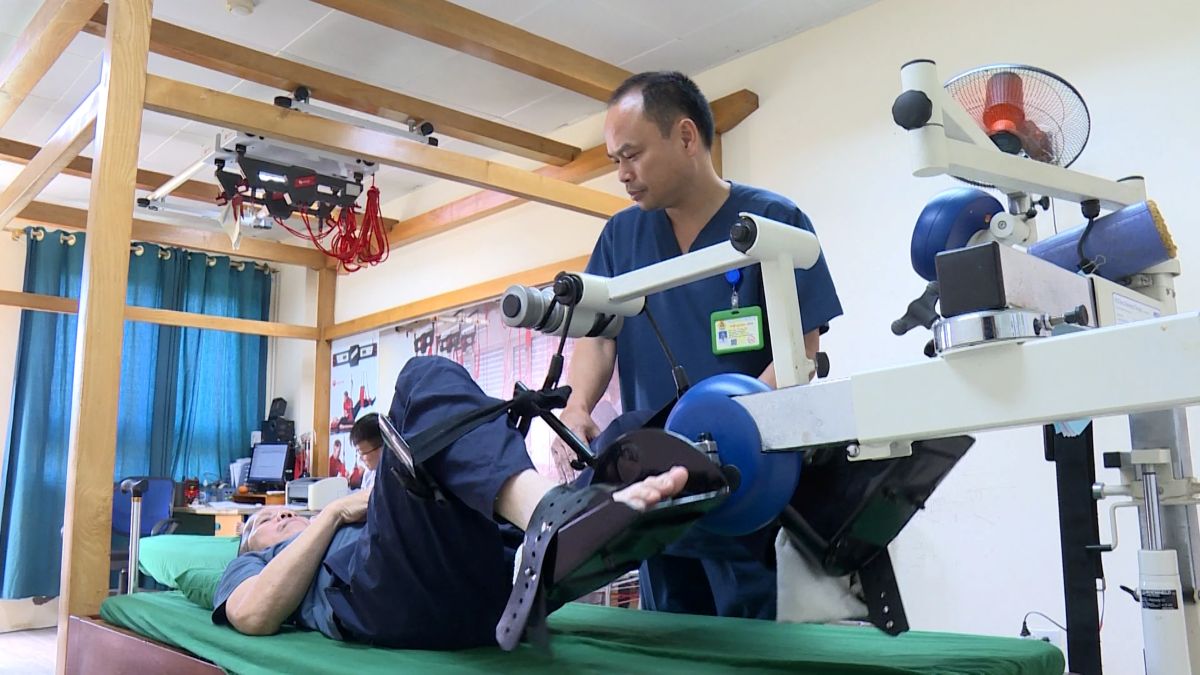
Motor rehabilitation for a patient with the support of specialized equipment.
Approximately 500 patients are currently receiving treatment at the Hospital, placing it under considerable capacity pressure. Meritorious Physician Le Huy Cuong, MSc, Specialist Level II Doctor and Deputy Director of the Hospital, who remains deeply concerned about the circumstances of every patient, explained:
“The Hospital receives and provides specialized treatment for patients living with severe sequelae of stroke, traumatic brain injury, spinal cord injury, or cerebral palsy.
Following structural damage to the central nervous system, patients often experience multiple impairments, including motor dysfunction, aphasia, dysphagia, and impaired consciousness and cognition. To help them reintegrate into the community, the Hospital has developed highly specialized, scientifically grounded, and comprehensive rehabilitation services.”
Only as we walked through the patient wards did we fully understand the meaning of the word “revival.” Rehabilitation is a long and demanding journey that requires perseverance over months or even years. Throughout that journey, doctors and nurses do more than provide treatment through medical techniques; they also serve as trusted companions, offering patients emotional support and encouragement.
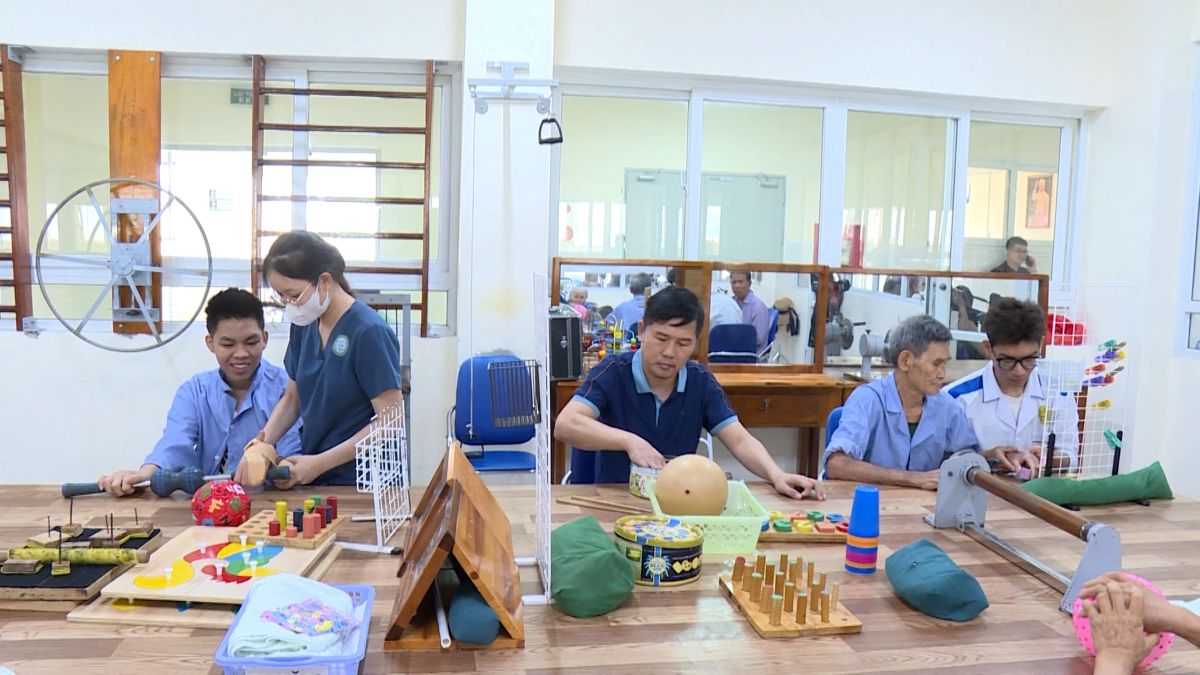
Rehabilitation therapists and nurses help a patient regain sensory and perceptual function.
We met Ms. Cao Thi Yen from Cam Thuy Commune in a hospital corridor. Her eyes shone with happiness as she watched her husband hold a cup of water by himself.
For nearly ten years, since her husband underwent life-saving surgery following a stroke, the Hospital has become a second home to the couple. Ms. Yen recalled emotionally:
“Our journey has been a very long one—from Cam Thuy General Hospital to Bach Mai Hospital, then back to the provincial General Hospital before finally arriving here. Throughout all these years, my husband and I have returned to the Hospital for treatment every year.
The doctors and nurses here are as caring and attentive as our own family members. After his brain surgery, my husband was completely bedbound. Thanks to the doctors’ persistent rehabilitation efforts, he can now walk normally, take care of himself, and even help with small household tasks. It truly is a miracle.”
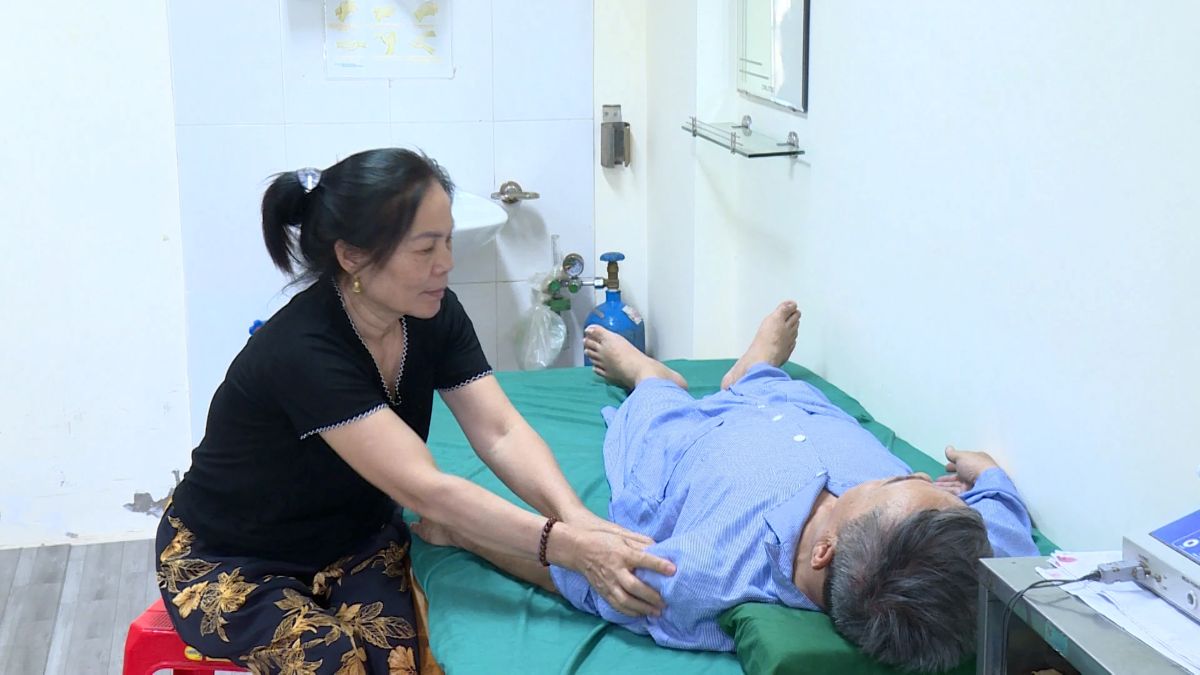
Ms. Cao Thi Yen from Cam Thuy Commune reassures and encourages her husband during his treatment.
This spirit of dedication and devotion shines particularly brightly in the Geriatric Medicine Department, which cares for patients in the later stages of life.
According to Dr. Nguyen Thi Chung, MSc, Deputy Head of the Geriatric Medicine Department, the department regularly manages and provides inpatient and outpatient treatment for more than 70 patients, whose average age is over 60. Many older patients regard the department as a second home and have returned for treatment every month for many years.
“Older adults commonly live with multiple coexisting conditions, age-related decline affecting several organ systems, and complex geriatric syndromes such as dementia, severe osteoarthritis accompanied by chronic pain, an increased risk of falls, sleep disorders, and persistent malnutrition.
To address these challenges, we must continually improve our professional expertise, apply advances in behavioral science—particularly psychological therapy—and always listen to and empathize with our patients so that we can help ease the emotional burden of their illnesses,” Dr. Chung explained.
Having brought her husband to the Hospital for many years to receive treatment for severe paralysis caused by a stroke, Ms. Lê Thi Thinh from Tuong Linh Commune could not conceal her gratitude:
“When my husband was first admitted, he had lost all motor function and was completely dependent on others for eating and personal hygiene. Watching the nurses work tirelessly—helping him rest comfortably, massaging each of his fingers, and patiently guiding him through every small exercise—brought great comfort to our family. The ethos that ‘a physician is like a caring mother’ is truly alive here.”
As we observed the Hospital’s activities—from intensive sessions to retrain movement in the arms and legs, patiently conducted speech therapy sessions, to swallowing exercises practiced one spoonful at a time—we were deeply moved by the meticulous care and compassion of its healthcare professionals.
In the struggle to regain essential human functions taken away by illness or injury, the patience of doctors and nurses is matched many times over by the hope and determination of patients and their families.
By seamlessly combining modern medical expertise with compassion, the healthcare professionals at National Rehabilitation Hospital continue quietly writing extraordinary stories in everyday life—supporting every returning step, bringing smiles back, and giving new life to people once confined by immobility.
Author: Ba Phuong (Source: Thanh Hoa Culture and Life Online)
Reader Comments